Showing posts with label tribute to a queen. Show all posts

Sunday, May 19, 2013

Anne Boleyn: Impact and Legacy

A COUNTDOWN TO HER EXECUTION: PART 4/4 ARTICLES
On this 19 May, 2013, the 477th anniversary of Anne Boleyn's execution, a reflection of the impact she had on her world and her legacy, in ours.
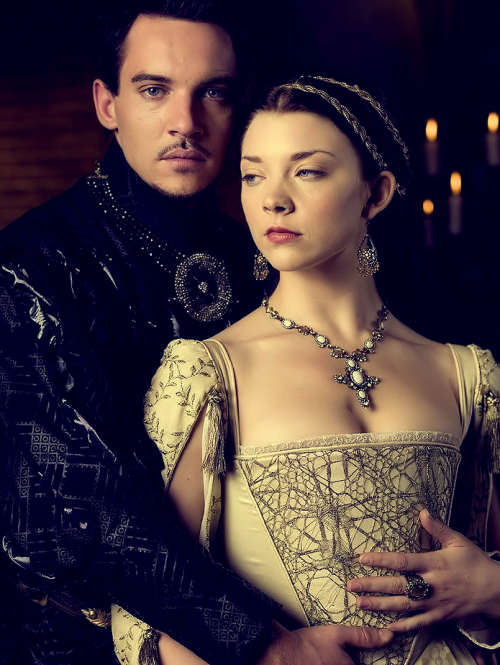
Natalie Dormer as Anne Boleyn being crowned on Showtime's The Tudors.
It seems there has always been a mixed reaction to Anne Boleyn – to her life, to her death, and, today, to her legacy. Should we remember and revile her, a six-fingered whore and witch, a grasping, cunning man-stealer? Or should we just accept that the truth of it is not so simple? The only simple statement that one could extract from so bold, colorful and powerful a life is that Anne, in her own right, had and has tremendous impact on her world and ours. She, a woman in the 16th century, was a guiding force in religious tolerance and the Reformation, a key player in one of the most enthralling political and diplomatic wars of history, a leader of the Renaissance, the single character who changed Henry VIII’s 55 year life most, a strong influence to among the most highly-regarded English monarchs in history, and ultimately, a feminist icon who embodies strong women of all centuries.
                Anne Boleyn was not a Protestant – but neither was she a corrupt manipulator of Scripture, happy to twist words about when the Roman Catholic Church failed to suit her needs. Many of the reformist pieces Anne owned being in French, her interest in church reform was probably sparked during her early years in France through her close friend, Protestant Princess Renee. Anne would be the one to supply Henry with a book key to his future cause – establishing a national church independent from Rome – this book was the martyr Tyndale’s The Obedience of a Christian Man, which stated all princes, being divinely chosen by God, should be freed from papal tyranny. Illuminating the Book, a list of all the books owned by the wives of Henry VIII, shows Anne owned at least a whole library of books of theology like this. As queen, she would be at Henry’s side through every step of the summer 1535 progress which was so key to gaining favor from the highly reformist progress around the Severn. On a more personal note, Anne owned various religious pieces describing the Lutheran idea of salvation through faith alone, but, again, she was not quite a Protestant at all. Imprisoned in the Tower of London she begged for the Sacrament, and her last earthly morning was spent attending Mass; yet, that she was a Catholic woman, debating and reading about the Reformation, funding poor Protestant scholars, encouraging the English Bible with such a fire, and urging the freedom of persecuted heretics, is a testament to her subtle devotion to religious tolerance.
Whatever her religious views, with the gift of foresight we can see that, intemperate and at times, arrogant, Anne was no saint. Yet these personal impurities were unknown to the Protestant community who adored her, would privately defend her innocence and revere her as exactly that: a saint. We can never know for certain who she was, privately, and yet the actions of hers that have not evaded record depict a brave, generous, thoughtful and intelligent lady, passionate about education, theology and, in every way, reform. Anne had the courage to defend said persecuted heretics, who include a merchant of Antwerp bullied for owning an English Bible; she had the courage to defy the king and his puppet-minister, Cromwell, so that money from dissolved Catholic monasteries could be offered to charity and improvements to the education system, above personal gain. The chronicles of Bishop Latymer, a future Protestant martyr under Anne’s stepdaughter Mary I, list the amount of money she donated as a staggering fortune of 14000 pounds within three years, not even including private sums allotted to struggling gentry or the scholarships she offered poor but hard-working theologians so they could attend prestigious universities. Anne Boleyn was the first queen of England to spread and encourage the English Bible; there was a copy, open and available to everyone, in her rooms, as well as several translations dedicated to her name. There was deeper meaning to this, yet another tie to her famous passion for education. Herself a trilingual since her education abroad at two of the greatest courts in Europe, understanding Latin bibles was no problem for Anne, but, English bibles being forbidden, the commons who could not understand Latin had to believe everything the clergy told them. They were unable to consider the word of God with their own opinions just because they had not been wealthy enough to get educations. Opinions were indeed important to the queen, and she used hers, paired with her political influence over Henry to create a legacy as one of history’s most prominent and generous spiritual benefactresses.
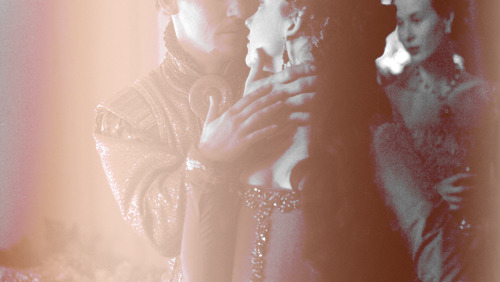
Natalie Dormer, The Tudors
By 1527, Henry VIII was determined to marry Anne Boleyn. The attraction must have been more than physical because Henry understood the magnitude of her intelligence and even trusted in it as he had and would never, again. Henry constantly wrote her letters updating her with every move regarding their Great Matter – he treated her as a partner and allowed her to receive foreign ambassadors even before they were married; one of them commented about the necessity of cultivating her graces if they sought the king’s. Catherine of Aragon would never have dared tell her husband what to do or who to favor; Jane Seymour would be reprimanded harshly for saying so much as two words in defense of northern rebels; poor Katherine Howard would be but an innocent, and perhaps unwilling, accomplice in her creation as queen; and Catherine Parr would be forced to kowtow to her husband for safety after a single religious debate with her tyrannical husband. It seems Anne Boleyn was the only woman in Henry’s life ever to be regarded as an equal, by him. Even when he disrespected her, Anne could not be silenced if she had an opinion to share; perhaps this was a reason why they were constantly at odds.
A bit less concretely, Anne was, in many ways, key to the creation of Henry as a more independent king – she used his trust and her influence over him to spearhead a faction against Wolsey, the corrupt adviser who had essentially ruled Henry for more than 20 years. In many ways she replaced Wolsey and upon his ruin became Henry’s most intimate adviser. Her family was elevated to one of the highest in the land, her father receiving two wealthy Anglo-English earldoms, her brother was made Lord Rochford, and in her own right she was made one of, and the only female, of five peers of the land. By right and not marriage she was already the most influential woman perhaps in England; Henry not only loved her but trusted in her abilities as a leader; this was unprecedented. Perhaps even more so was the appointment of the most powerful religious authority (second only to the king) almost entirely through the favor of a woman – Anne Boleyn. Thomas Cranmer, who enjoyed patronage from Anne and the Boleyns through the years of her courtship with Henry and her reign – would hail the queen as a woman he respected above all others. Many of the bishops would respect her as well, as she would have a significant hand in their appointment; she was one of few queens in English history with such a strong role in the assignation of clergy. Even many of the king’s councilors, Cromwell among these, were her picks, and the king’s inner-circle of most trusted friends, who included her brother and Henry Norris, were her loyal servants. Contrary to the stereotype that upon becoming queen, Henry instantly came to show his wife disfavor, Anne was the first queen-consort to have some statutory claim to the throne through Parliament’s Act of Succession.
“She (Anne) knew perfectly how to sing and dance…to play the lute and other instruments.” Anne was a talented musician, and some historians argue that it was this trait of hers in particular that earned her royal favor. A poet, too, she seemed to excel in nearly everything artistic, offering patronage to the most uniquely talented artists in the land and decorating her rooms with French styled art. Some of these artists include Holbein, a man regarded as a genius. Acton Court, one of the grandest castles Henry and Anne stayed at during their summer progress in 1535, was decorated with French wall paintings like art the queen herself would commission, and the fashions were styled entirely to her liking in the French manner. As a young debutante in England, teenaged Anne Boleyn had probably been expected to wear the traditional dress of an Englishwoman – the gable hood, the overly-ostentatious gowns – but very typically of her, she created her own ‘fashion’ rules and set in motion new national trends. In many ways Anne directly affected the Renaissance with all the taste and precision of a Medici or d’Este.
Long after her death, the memory of Anne Boleyn and the impact of her life would affect not only all of Henry VIII’s next four wives, but the last three Tudor monarchs as well. Tudor historian David Starkey was right in going as far as saying that his ten-year romance with Anne Boleyn was the last time the king would ever fall in love truly and properly; it was sharing in opinions, sharing in faith, sharing in everything as equals the way very few kings and queens after them would. Jane Seymour was reminded time to time what would happen if she incurred her husband’s wrath, cruelly told by him to ‘remember what happened to [her] predecessor’ when she ‘meddled in [his] affairs’; Anne of Cleves cried for relief upon learning she could leave her marriage with her life, indefinitely expecting something far worse given the fate of Wife number 2; if Katherine Howard, poor young girl, had been old enough to understand her cousin’s life, perhaps she could have avoided her fate; and Catherine Parr, an intelligent Protestant in many ways similar to Boleyn, would work hard to help guide Elizabeth in the faith of her mother. King Henry hated Anne Boleyn in May 1536 when he sent her to her death, but no matter how hard he worked to lie to his conscience, somewhere in his corrupt soul, he knew she was innocence, and there is evidence that, whether he regretted his decision or not, he may have missed her. Henry would recall that Anne Boleyn was unlike Anne of Cleves, a woman unattractive and unexciting in every sense, with something like regret, in a very brusque letter to his six-year-old daughter Elizabeth. All his life he would keep some of Anne’s books and tablets of their entwined names.
 However briefly Anne was in her daughter’s life, she was one of Queen Elizabeth I’s strongest influences – perhaps she was even regarded as a role model. A week before her arrest, sensing trouble in the air, Boleyn made a heartfelt request to her chaplain, a kind and paternal Protestant man, to guide the spirituality of her daughter; decades later, upon miraculously becoming queen of England, Elizabeth would practically give Parker supreme religious authority, begging him to be her Archbishop of Canterbury. Elizabeth’s fate and faith were in that sense, beyond the grave, largely shaped by her mother. Dark-eyed, tall, slender; fiercely witty, charming and flirtatious; a talented musician and linguist, Elizabeth was in many ways like the redheaded reincarnation of her mother, but in this second lifetime, at least in the department of men and their fickleness and treachery, she had learned a lesson and never married. It is a fascinating debate indeed – why did a woman so eligible and so sensual never wed? There are many ideas – that she was a lesbian, that she lacked female sex organs, that she was afraid of childbirth – but most historians are in agreement: aside from wanting to protect England from a foreign king and creating civil unrest through marrying an Englishman, on a personal note, she feared men. And she had good reason: her father executed a teenage girl who she had enjoyed a friendly relationship with, and the mother whose name she revered. Unto her death Elizabeth kept a ring which had enclosed miniatures of herself and her mother, together, as circumstances had prevented them from being, in life.
“…But perhaps I have not always shown to him such a perfect humility and reverence as his graciousness and courtesy deserved, and the honor he hath done me required,” Anne Boleyn said in her unforgettable speech at her May 1536 trial. In the sixteenth century, a wife ought to submit to her husband, in body, in word, in everything, even if they were but shepherd boy and goose girl; Henry was not just Anne’s husband, he was her sovereign but still she did not submit. She demanded to be treated as an equal, and in so holds true to the greatest concept of modern feminism. Brave, independent, formidable and defensive of the things she loved, with a sense of humor, charity and compassion, a wide range of talents, and, to top it off, intelligence, charisma, and iron will, perhaps it would not be a stretch to say her personality itself is her greatest legacy of all. Here we have a woman who wasn’t born for greatness, but shaped her own destiny and made herself a legend.

Natalie Dormer

Saturday, May 18, 2013

1536 (Part 2)

A COUNTDOWN TO HER EXECUTION: PART 3.5/4 ARTICLES

Anne Boleyn in BBC's The Six Wives of Henry VIII (1970) at her treason trial.

Anne clearly cared for Norris, a long-time friend, and his safety, being concerned that another accused lover who she was less close to, Francis Weston, would incriminate Norris while under questioning. Anne herself had accidentally incriminated the young and handsome Francis Weston by telling her ladies, who reported everything to the constable, who reported everything to Cromwell, that she worried for him, as Weston had told her, probably jokingly, that he was in love with her. In the days to come, George Boleyn, William Brereton, Richard Page, and Thomas Wyatt would be arrested. The proof is in the selections Anne’s alleged lovers that the plot was largely, if not entirely, orchestrated by Cromwell. Or at least that Henry had given him full command of it.
The Boleyns offered William Brereton patronage for the last few years, but he and Anne were not even like her and Norris, in the sense that they were not close friends (or even friends, for that matter) and had hardly ever interacted. However, wielding strong authority in the north and having a close relationship with the king’s illegitimate son, Henry Fitzroy, Duke of Richmond and Somerset, Brereton stood several times in Cromwell’s way by vetoing various reforms he submit to be passed in the lands Brereton had power over. His downfall obviously had nothing to do with him and Anne potentially being lovers, but Cromwell’s ambition and ruthlessness. The same can be said, to some degree, of George Boleyn, the queen’s beloved brother. He was close with the king, and no matter how powerful an adviser Cromwell would ever rise to be, valued and intimate friends of the king in his privy would always make for competition. If Anne was brought down but George lived, there was no doubt that his every last breath would be used in fierce and reckless defense of his innocent sister; so the incest charge was conjured up, and given they were famously close and London preyed on juicy things to gossip of, it stuck. Four of the five men Anne was accused of adultery with were either tight rivals of his for favor and influence with the king, or, like Brereton, men who had somehow stood in his way.
There was more evidence yet that Cromwell was running the show. Thomas Wyatt and Anne notoriously had enjoyed a romantic relationship nearly ten years ago, which the Duke of Suffolk claimed had been sexual – Wyatt should have been the most suspicious, yet due to his and his father’s friendship with Cromwell, he was arrested and released unscathed. Cromwell even said to him, “Well, Master Wyatt, you must go to the Tower, and I promise you that I shall be your good friend.” It went the same, essentially, for Page. By May 8th, Cromwell was receiving dozens and dozens of letters from people, who included the governor of Calais, requesting shares of the fortunes of the lovers in the Tower, as if they were already dead. They were much like vultures, but more like selfish cowards abandoning a ship they had once flocked to when it was setting sail, and now fleeing it as it sunk – that ship was Anne Boleyn, who many had once supported. Among these turn-coats was Boleyn’s cousin, Francis Bryan, who would later be called the Vicar of Hell for this treachery. There was also Henry Fitzroy, who had always been on friendly terms with the queen, and upon hearing the news quickly rushed up to London to congratulate the king on ridding himself of such a vile whore.
Anne Boleyn was accommodated in the apartments of the Tower of London which had once been decorated for her 1533 coronation and waited on women, chosen by the king, who she especially despised, and who despised her right back. They included her aunts through her father – two Shelton ladies – as well as Lady Kingston, the constable’s wife commanded to spy on her like a hawk, and the only woman she was fond of, her childhood governess, Mrs. Orchard. None of the women were allowed to communicate with Anne unless Lady Kingston was in the room, so her every word could be reported to the constable. Anne constantly complained about the king’s unnecessary spiteful choices for her attendants, although, since legally she was still the queen of England, she was housed and treated with due respect, and waited on by an appropriate staff of at least nine. What troubled her deeply was that she could not have the Sacrament brought to her room, for, just as she was legally the queen of England, she was, too, legally a prisoner with a heinous treason charge to her name, and thus, by the law forbidden to have it in her rooms. Considering many Londoners were whispering against the justice of Anne’s incarceration, the last thing Cromwell would want was the image of her kneeling like a martyr before the Sacrament. She should have at least been allowed the confessor of her choice, who was the almoner John Skip, but this request was ignored by Cromwell, who probably had a distaste for skip after the indiscreet sermon of April 2nd.
Anne’s her moods swayed from extreme sadness – like when she had broken down in tears upon learning she was to live in her apartments from three years ago – to bizarre hysteria, anger and rebelliousness, and a grave, solemn quietness. These moods add to the mystery of the legitimacy of the reckless letter, allegedly written by her to the king, on May 6th, which reads:
Sir,
Your Grace's displeasure and my imprisonment are things so strange unto me, that what to write, or what to excuse, I am altogether ignorant. Whereas you send unto me (willing me to confess a truth and so obtain your favour), by such a one, whom you know to be mine ancient professed enemy, I no sooner received this message by him, than I rightly conceived your meaning; and if, as you say, confessing a truth indeed may procure my safety, I shall with all willingness and duty, perform your duty. But let not Your Grace ever imagine that your poor wife will be brought to acknowledge a fault, where not so much as a thought ever proceeded. And to speak a truth, never a prince had wife more loyal in all duty, and in all true affection, than you have ever found in Anne Bulen - with which name and place I could willingly have contented myself, if God and your grace's pleasure had been so pleased. Neither did I at any time so far forget myself in my exaltation or received queenship, but that I always looked for such alteration as I now find; for the ground of my preferment being on no surer foundation than your Grace's fancy, the least alteration was fit and sufficient (I knew) to draw that fancy to some other subject.
You have chosen me from low estate to be your queen and companion, far beyond my desert or desire; if, then, you found me worthy of such honour, good your Grace, let not any light fancy or bad counsel of my enemies withdraw your princely favour from me; neither let that stain - that unworthy stain - of a disloyal heart towards your good grace ever cast so foul a blot on me, and on the infant princess your daughter.
Try me, good King, but let me have a lawful trial, and let not my sworn enemies sit as my accusers and as my judges; yea, let me receive an open trial, for my truth shall fear no open shame. Then you shall see either my innocency cleared, your suspicions and conscience satisfied, the ignominy and slander of the world stopped, or my guilt openly declared. So that, whatever God and you may determine of, your Grace may be freed from an open censure; and my offense being so lawfully proved, your Grace may be at liberty, both before God and man, not only to execute worthy punishment on me as an unfaithful wife but to follow your affection already settled on that party for whose sake I am now as I am, whose name I could some while since have pointed unto - your Grace being not ignorant of my suspicions therein.
But if you have already determined of me, and that not only my death, but an infamous slander must bring your the joying of your desired happiness, then I desire of God that He will pardon your great sin herein, and likewise my enemies, the instruments thereof; and that He will not call you to a strait account for your unprincely and cruel usage of me at His general judgment seat, where both you and myself must shortly appear; and in whose just judgment, I doubt not (whatsoever the world may think of me), mine innocency shall be openly known and sufficiently cleared.
My last and only request shall be, that myself only bear the burden of your Grace's displeasure, and that it may not touch the innocent souls of those poor gentlemen, whom, as I understand, are likewise in strait imprisonment for my sake. If ever I have found favour in your sight - if ever the name of Anne Bulen have been pleasing in your ears - then let me obtain this request; and so I will leave to trouble your grace any further, with mine earnest prayer to the Trinity to have your grace in his good keeping, and to direct you in all your actions.
From my doleful prison in the Tower, the 6th May.
Your most loyal and ever-faithful wife,
Anne Bulen
                Evidence for the letter being a forgery include that Cromwell probably would not keep any letter written by Anne, slight differences between the penmanship of this letter versus the penmanship of her others, and the fact that she referred to herself not as ‘Anne the Queen’ but Anne Bullen and ‘the lady in the tower’, seems unlikely for a woman as proud as Anne. However, it is highly likely that Anne did write letters to Cromwell, trying to reach the king, and that in her famous recklessness she might have written letters bold as this. None of them, however, have survived, either destroyed by Cromwell or the library fire of 1731. There is some evidence for this letter being legitimate – the letter had been kept private until the 17th century, it could have been a copy in Cromwell’s hand (to explain the different penmanship), and Anne was capable of being hotheaded and had never been afraid, before, to tell Henry off.
                th, the same day that enough ‘evidence’ had been collected to try Anne’s lovers and the same day, too, in which Percy wrote a letter formally denying any pre-conctract with the queen that would have made her marriage to the king null, by a Spanish chronicle, Anne was excited to be visited by the council, hoping for a chance to answer their questions and clear her name. However, as the Archbishop of Canterbury, Cromwell and Norfolk instead only began to recount the charges against her and, essentially, lecture her, she dismissed them as, being the queen of England, she still had the power to, imperiously saying, “Waste no more of my time. I have never wronged the King, but I know well that he is tired of me, as he was before of the Lady Katherine… It has all been done as I say, because the King has fallen in love with Jane Seymour, and does not know how to get rid of me. Well, let him do as he likes, he will get nothing more out of me, and any confession that has been made is false.” To the Duke of Norfolk, her own uncle who had contemptuously accused her of incest with George, she said, “My brother is blameless and if he has been in my chamber to speak with me, surely he might do so without suspicion, being my brother, and they cannot accuse him for that. I know that the King has had him arrested so that there should be none left to take my part. You need not trouble to [talk] with me, for you will find out no more."
On May 11
                The following day, Henry Norris, William Brereton, Francis Weston and Mark Smeaton were tried in the public London court, and since there was no defense at a treason trial, just a sentence and a couple days later, execution, they were found guilty, condemned to a traitor’s death. The king, in all his oh-so bountiful grace, showed them mercy and they were allowed regular beheading by the ax. After their trial, on 13th May, although herself she had not been tried and legally she was still Queen, Anne’s household was disbanded – this included cooks, maids and ladies-in-waiting (who would return within weeks to serve a new queen), tailors, and clerks. The sum of people she had in her employ surpassed two-hundred, and her rooms had been a center of not just unique French fashion and taste, but also art she commissioned, particularly by Holbein; language, and religious learning. Obviously, her guilt or innocence meant nothing – her household was gone, and soon, morality and justice thrown out the window, she would be, too.
                Although Anne had generally been unpopular, called a whore and viewed as the supplanter of saintly Queen Catherine, the Protestants, and especially the theologians she had offered patronage to and the reformist bishops who she had used royal influence to appoint, adored Anne and viewed her as a martyr. Protestant Alexander Aless had nightmares of her death; Thomas Cranmer, Archbishop of Canterbury, her reluctant accuser and the man who would annul her marriage and declare Elizabeth a bastard, had always admired and supported her, and upon hearing of her arrest nearly a week earlier on May 3rd, was sincerely regretful and wrote that he had never had higher opinion of any woman. On the day of her execution he would weep and say, "She who has been the Queen of England on earth will today become a Queen in Heaven.” Even those who had hated Anne were upset by her fall – they saw it as Henry simply trying to rid of a woman he’d tired of for a mistress: and they were, in some ways, correct. Jane was the obvious choice for Henry’s next wife – he had her moved out of the city to keep her safe, and they enjoyed intimate but lavish feasts and parties while she was kept safe, far from the chaos and danger of London, in a quiet and inconspicuous house of Nicholas Carew.
On Showtime's The Tudors, Natalie Dormer as Anne Boleyn delivers this speech in the form of a 'last confession'.
                On May 15th, Anne and her brother were to be tried not in the public courts, but before the Peers of the land who were led by her uncle, Norfolk. Onlookers heavily supported Anne who had shown surprising dignity, and in the face of the radical and bizarre accusations, remained calm and did not even flinch. At many of the dates and times of the charges she had been at different places, but truth to be told it made no difference – this was a treason trial and she could not defend herself. She was pronounced guilty by her weeping uncle, sentenced to burning or beheading at the stake; Mrs. Orchard screamed, the lover of her youth, Percy, fainted, and the Lord Mayor would recall the trial as a charade to rid of the queen at any price. Anne was allowed to speak after the sentence, and in a career-defining speech, she said: "My lords, I do not say that my opinion ought to be preferred to your judgment; but if you have reasons to justify it, they must be other than those which have been produced in court, for I am wholly innocent of all matters of which I have been accused, so that I cannot call upon God to pardon me.
“I have always been faithful to the King my lord; but perhaps I have not always shown to him such a perfect humility and reverence as his graciousness and courtesy deserved, and the honor he hath done me required. I confess that I have often had jealous fantasies against him which I had not wisdom or strength to repress. But God knows that I have not otherwise trespassed against him.
“Do not think I say this in the hope of prolonging my life, for He who saveth from death has taught me how to die, and will strengthen my faith. Think not, however, that I am so bewildered in mind that I do not care to vindicate my innocence. I knew that it would avail me little to defend it at the last moment if I had not maintained it all my life long, as much as ever Queen did. Still the last words out of my mouth shall justify my honor. As for my brother and the other gentlemen who are unjustly condemned, I would willingly die to save them; but as that is not the King's pleasure, I shall accompany them in death. And then Afterwards, I shall live in eternal peace and joy without end, where I shall pray to God for the King and for you, my lords.
“The judge of all the world, in whom abounds justice and truth knows all, and through His love I beseech that He will have compassion on those who have condemned me to this death."
Indeed, Anne had been different from all women who were born to cleave to their husbands – she had been rebellious, defiant, unafraid to express her opinions, and Henry had not only been her husband but her sovereign. Despite being hotheaded, reckless and intemperate, Anne had been pious and of strong faith, and this too was expressed in her speech. As for her brother, tried by that same court, he left a strong impression too and had the support of onlookers, brazenly implying the king’s impotence was likelier than Anne’s casting spells on him to prevent him from having sons. However, this confidence was followed by fear, depression and anxiety as his conscience ravaged him in the days leading up to his execution, and he sorted through his tremendous debts. His sadness won him the sympathy of even the constable, Kingston, and George asked money to be sent to two clerics who had been ever loyal to the Boleyns.
On May 17th, Rochford, Norris, Brereton, Weston and Smeaton were beheaded on Tower Hill – not, as the legend goes, under Anne’s window. George Boleyn’s speech addressed the vanities of life and the urgent need for a reformed Church free of corruption and said vanity; the rest of the speeches were traditional –praise to the best king of Christendom, prayer for mercy, et cetera. All of their executions were recorded by Thomas Wyatt, watching from his window in the Tower. It was on this same day that Anne learned her marriage to the king had always been null and void based on their first degree of affinity through his sexual relations with her sister Mary Boleyn. Percy had staunchly denied any contract between him and Anne, and so that could not have been used to annul the marriage. Thus, Elizabeth was declared a bastard, and though Anne was no longer the king’s wife, she would soon be executed for being unfaithful in a marriage that had never legally existed. That should further attest to the injustice and illogic of her trial and death.
The 18th of May was supposed to be the day of Anne’s execution; she enjoyed spiritual comfort in the morning, praying with her confessor John Skip as early as 2 AM. As early as possible she attended Mass with Constable Kingston at her side, and swore on the Body of Christ, her innocence. Her adrenaline high, expecting to die by before the day’s end, the news that it was to be postponed until the 19th must have been torment. Her French executioner was to be delayed, although as further proof to the fact that, he had to be summoned to England days before she was even found guilty at her trial.
Moving tribute using footage from Showtime's The Tudors, depicting Anne's whole life leading up to her execution.
The rest of the 18th was put to good use; she had four ladies-in-waiting who she actually liked, and asked Lady Kingston to extend her apologies to her stepdaughter, Lady Mary. It is a modern day stereotype that Anne was some sort of ‘evil stepmother’ to Mary, but whatever small cruelties she showed the girl, what must be kept in mind is that Anne initially showed her politeness. She offered to intercede with the king on Mary’s behalf if only her stepdaughter acknowledged her as queen – this was returned with rude obstinacy.
On the morning of the nineteenth, Anne dressed in silver and crimson with an ermine cloak, and gave to her close friend and lady-in-waiting, Margaret Lee (sister of Thomas Wyatt), a prayer book in which she wrote, Remember me when you do pray / that hope doth lead from day to day. Margaret was among the women who accompanied her to the scaffold, where there were only some hundreds of onlookers – no foreigners were allowed to view the execution for fear of the controversy that might be stirred when they reported back to their kingdoms. Anne addressed the people with a solemn beauty, and was described by some witnesses as having never looked more beautiful, to at last throw out the myth that she went to her death frail and broken. A contemporary, after all, gave her age as only 28.
                Anne had been defiant all her life, but as Christians of her day must, she accepted death with grace and honor, and did not say anything that could put her family or her daughter in any legal trouble: Good Christian people, I am come hither to die according to the law and therefore I will speak nothing against it. I come here only to die and thus to yield myself humbly to the will of the King, my lord. And if, in my life, I did ever offend the King's Grace, surely with my death I do now atone. I come hither to accuse no man, nor to speak anything of that whereof I am accused, as I know full well that aught I say in my defense doth not appertain to you. I pray and beseech you all, good friends, to pray for the life of the King, my sovereign lord and yours, who is one of the best princes on the face of the earth, who has always treated me so well that better could not be, wherefore I submit to death with good will, humbly asking pardon of all the world. If any person will meddle with my cause, I require them to judge the best. Thus, I take my leave of the world and you and I heartily desire you all pray for me.
                And thus she removed her jewelry, and her maids removed her English hood, her great ermine headdress, and she gracefully accepted the French executioner’s sincere regrets. The man was enchanted of her and struggled to find the means to perform his job; to position her head correctly without frightening her, he said, “Fetch my sword!” Anne looked to where his servant was, and in that fleeting moment, the sword came down. Her life was over, but she was destined to haunt the man who destroyed her – his name, his honor, his reign. He would forever be remember as a tyrant and a wife-murderer, and it all started with her; after Anne’s death came the bloody obliteration of the northern rebels, the judicial murder of everyone who shared some faint blood relation to the insecure tyrant, and the murder of another wife nearly forty years younger than him. Having destroyed a woman he had moved mountains to have, Henry at last came to understand the full magnitude of his power, and perhaps this was where his tyranny truly began.
                Anne had struggled for seven years to become the queen, and through those seven years and her brief reign, the living Queen Catherine and the people’s love and reverence for her was like a permanent shadow. In turn, Jane patiently waited a number of weeks to become the queen of England, her two predecessors dead and one to be remembered as a traitor and a whore. She would reign for less than two years, and karma would work its dark but beautiful magic and destroy those who had destroyed Anne – Nicholas Carew and Cromwell would face the ax they had unjustly condemned so many to, by 1539 and 1540; the more sympathetic Archbishop of Canterbury would burn under Mary ‘Bloody Mary’ I; and the Duke of Norfolk would be arrested for treason and incarcerated in the Tower for years, escaping execution only upon the king’s death. And as for Henry – his wounds from his January 1536 jousting accident would never fully heal, but would turn to ulcers that condemned him to slow, painful death, an obese, bitter, perhaps a bit mad, and maybe even regretful 55-year-old.


1536 (Part 1)

A COUNTDOWN TO HER EXECUTION: PART 3/4 ARTICLES

Note: I have been making regular posts on a daily basis detailing every day of the fall of Anne Boleyn, but for my convenience have put together a full scale article of Anne's life in 1536, beginning to end. It is in two parts. Enjoy! -- K.C.

Historians are in agreement about one thing pertaining to Henry VIII’s life– 1536 was the year that altered it, perhaps forever. However much this can be accredited to Anne Boleyn, she spent very little of it with him – this year would see her life not only turned upside-down, but ended at the edge of a French blade before the end of May. She had been the queen of England for one thousand days; Henry had been the king of England for twenty-seven years.
                There are many questions surrounding the great enigma of the year 1536: Why and how did Henry VIII become such a tyrant? Why did he have to order Anne Boleyn’s execution? If she wasn’t guilty of treason and adultery, how was she condemned? How long did it take for the queen to be brought down? What political factors influenced the fall of Anne Boleyn – why did she fall? What was England’s reaction and how did it change upon her disgrace and death? Lastly, perhaps most importantly as these articles are in tribute to her life, what was Anne Boleyn’s personal life like in this dramatic, treacherous and deadly year? Shockingly, it started out blissfully, beautifully, with victory.
                After a golden summer on progress in which the queen had enjoyed both tremendous favor and tremendous influence with the king, she returned to London pregnant, and within months, in January 1536, she and Henry were to receive the best of news – her predecessor, Catherine of Aragon, the shadow-queen who seemed to linger eternally over them, was finally dead. Of course, it was around this time, when they returned to London, that a pale and quiet and very simple lady-in-waiting, Jane Seymour, caught the king’s eye. Naturally, Anne had been irritated, but she was pregnant and this was the way of things; Jane would be the usual and very temporary royal diversion. She could never know at the time the role that Jane (or at least her supporters) would play in her oncoming destruction, and so she was contented enough, all the more so with her long-time adversary’s death and a male heir in her womb.
                But this great happiness was not to last, and her victory – Catherine of Aragon’s death – was to transform into a key factor in her undoing. On January 24th, Henry VIII fell unconscious after being unhorsed; around five days later Anne would miscarry, and in a fatal confrontation in which the king dolefully declared God would give them no sons, she would credit his accident as the reason for the miscarriage. That, and the melancholy she experienced upon seeing him locked in an embrace with the “pure and virginal” Jane Seymour.
                Historian Retha M. Warnicke credits this miscarriage of a male fetus as the whole reason for the queen’s fall, claiming that it was deformed and this made for strong evidence that she had led a sinful life. However, there is little unprejudiced evidence of any fetal problems, nor is there that a relationship between Henry and Seymour became serious until spring – thus, a quotation from Eric Ives’ The Life and Death of Anne Boleyn should clear up the common misconception that this miscarriage led to the tragedy of May 19: “The miscarriage of 29 January was neither Anne’s last chance nor the point at which Jane Seymour replaced Anne in Henry’s priorities. It did, nevertheless, make her vulnerable again.” She remained vulnerable, as she would always be without a son, but this was her third pregnancy and fertility was not the problem; Henry’s statement that God would not give them sons only proved that he did not hold her to blame for their misfortunes, but credited divine will. At the rate she took with child, there was no reason why she should get pregnant, again, soon, and then have a son within a year. Anne Boleyn’s actual undoing would be quite a bit more political.
                And as the king of England, Henry VIII and his moods were, if not entirely, than largely, ‘politics’. His power was supreme, as he was both spiritual and governmental head of England after the split from Rome and Roman Catholicism, and in the months to come, his struggle to overcome the prying injuries of his jousting fall (which would never fully heal) made his mood inordinately foul. He was angry enough with Anne to leave her, while she recovered from her miscarriage (which had left her in too much pain to walk), and lead the court to Greenwich, in which Jane Seymour was roomed near to the king in apartments which Cromwell had so kindly given up for her. It was the first time since 1531, when he had left and never again seen Queen Catherine, that a queen of England had been separated from the court. He was angry, but it was not as if he had never been angry with her before, it is not as if he never told her he could bring her down quickly as he had raised her, blamed her for earning him so many enemies; it is my opinion that Henry VIII’s will and emotional sentiments had a very minimal role in her destruction, but that it was largely the doing of the adviser who had given up his apartments to Seymour – Thomas Cromwell. The rift between Queen Anne and the lawyer whose loyalty to her had been the source of his greatness would only grow and grow after this.
                The queen recovered and joined the court at Greenwich, where Jane and Henry had been getting along so well that by March Chapuys recorded the affair, and Henry was sending her money. Jane, egged on by a family of politicians who knew that so much more could be squeezed out from a king than moneys if she paraded her virtue and refused, accepted neither the money nor the subtle invitation to the royal bed, and from there the attraction only heated and the Seymour family was on the rise.
                Her husband’s affair pained Anne; all of his affairs did, as, having been his only love in the seven years of their courtship, she had never gotten used to him showing favor with another. It being Lent season, she could not even bed with Henry, and thus, could not hope to conceive her son and savior for many weeks. There was more bitter news yet with her most beloved lapdog Purkoy, who she was known to fawn over, taking a fall from her window, and her mother becoming deathly ill. 1536 was playing out like a tragedy for her, and the shifting political sands worsened it. The death of Catherine opened up potential for a Spanish alliance, and if Henry chose to swing in that way, he might then be of mind to restore England to Roman Catholicism. Since his marriage to Anne was invalid in the Vatican, their marriage would be null, and with Catherine dead he would be free to remarry. But the condition was the restoration of Lady Mary, and of course, cleaving to the Pope in all things once again and forfeiting his supremacy. Henry was not in love with Jane to the point that he would leave Anne for her; they were about the same age, anyway, and thus both equally fertile, if you take that the queen birth-year as 1507.
                We can’t quite say that Anne had become politically useless because she was an Englishwoman and Henry was looking to a foreign alliance with either the Empire or France – Jane was an Englishwoman. However, what would have been her saving grace, aside from a son, was a secure betrothal between Princess Elizabeth and the French dauphin – yet, though the French had once been supported her, there was a question mark by the legitimacy of the princess and nothing ever came of the betrothals. Had a proxy marriage been secured, Elizabeth would have been acknowledged as legitimate, and thus, Anne, as queen. Yet it was not to be.
                By April, the rift between Cromwell and Anne had become explosive. The rich Roman Catholic monasteries destroyed, Cromwell willed that the moneys and jewels go to the royal treasury – Anne disagreed. Heavily involved in charity and education, from offering poor scholars patronage to donating huge sums of money to impoverished families she had never even met, the queen stood in his way and endless wealth by staunchly arguing that the greater sum of the acquired money be focused on education for the poor. Years ago, Cromwell had been key to securing divorce between Catherine and Henry, and he and Anne being inclined toward the Reformation, she had always shown him favor. He had used this favor and was the king’s most powerful adviser, as once Wolsey had been – and as Wolsey and Anne had sparred, now history repeated itself. If history repeated itself further, and Cromwell indefinitely was aware of the parallels, then he could expect utter destruction, perhaps even execution, especially if Anne borne an heir male and thus permanent security and favor. With that understood, Cromwell saw that he had rid of Anne before she had a son and rid of him.
                As Cromwell had publicly shown support of Jane Seymour in giving his rooms up to her, Anne now publicly declared herself his enemy; on 2nd April, she endorsed the sermon of her loyal and hot-headed almoner, John Skip – Who will convict me of sin? Essentially, it compared her to Esther, trying to save the king from his wicked adviser, Haman (‘Cromwell’) and heartily preached against the use of money from the monasteries for selfishness and personal gain. A month from that day she would be arrested.
                The death of Catherine of Aragon some months ago was not to be her undoing. With Catherine dead, should Henry wish to be rid of Anne, he could marry whoever he wished, and that seemed to be Jane Seymour. She was very much the ‘right girl for the right time’, as it had only been a couple of months since her relationship with Henry heated up. There is some romantic legend, although the truth of it is highly debatable, that the day after their wedding, a couple of ‘pretty women’ caught Henry’s eye and he claimed that had he met them before, the marriage would have been delayed. At any rate, it seems that around now, Cromwell shrewd and politically-astute took advantage of the strife and coolness between king and queen, and favor shown to another woman, to convince him that Anne should be ridden of. Some believe that the fall of Anne should be blamed more on Henry, and they are right – no matter what we attribute to Cromwell, he signed the death warrants. However, after three years of marriage and ten years altogether of being with Anne, why should he so suddenly tire of her tantrums and intemperance? It does not appear that anything snapped between them; their relations were strained, true, since the miscarriage in January, but they had been after her 1534 miscarriage and they were reconciled soon enough. Nothing had snapped between Anne and Henry, but something had quite obviously snapped between Cromwell and Anne.
                While the anger that had for ten years translated so smoothly to passionate love, was churning slowly to passionate hate as he fell more in love with Jane and was perhaps coaxed along by a threatened Cromwell, under my speculation, the key factor in Anne Boleyn’s destruction presents itself not as Henry but factional and may be even foreign politics. After all, Cromwell was visiting privately with Anne’s most absolutely declared foreign adversary, who had been and was staunchly loyal to Catherine of Aragon and Lady Mary; this man was Ambassador Chapuys, who referred to Anne in his chronicles as ‘the Concubine’. Thomas Cromwell also visited with Nicholas Carew, a close friend to the Seymours who bargained with him, promising that Jane would be his puppet if she was queen, and he would order her to do whatever Cromwell said – something Anne Boleyn, with her hothead and strong opinions, would never.
The fall of Anne Boleyn was brought about so quickly that in her The Wives of Henry VIII Antonia Fraser refers to construction of Anne’s crest being ordered to decorate some castles, as late as sometime between late April and early May. She was still referred to, in Henry VIII’s letter to foreign ambassadors, as his most entirely beloved wife, with some hope for male heirs expressed, on 25 April, exactly a week before her arrest. This is either a testament to how little he knew about Cromwell’s plot (and thus how little he had to do with it) or an act to make her trial more convincing – he could not be seen as trying intentionally to be rid of her, as nearly ten years earlier, he had to appear regretful that there was doubt to the legitimacy of his marriage to Queen Catherine. We can never know, but I postulate the former. On a side-note, it is a common misconception that Carew, instead of the queen’s brother George Boleyn, being named Knight of the Garter on 23rd April, 1536, was proof of Anne’s oncoming fall, and yet Eric Ives writes that a deal had been struck the year before that Carew would have the Garter that year, and thus, that this was not such a blow or public humiliation to the queen. By that point, Anne not being in ‘hot water’ around April 23rd, yet, is proof of the suddenness with which she fell.
Indeed, while this vengeance of a once loyal supporter was exacted upon her quickly and suddenly, it is possible that Anne was aware of her surroundings, however calm and lively she still appeared outwardly. She accused a very close friend of both her and the king, Henry Norris, of no longer courting Madge Shelton for her kinship with Anne, suggesting that he was aware of the queen’s oncoming destruction and no longer wished to connect himself with her. Anne proceeded to accuse Norris of being in love with her, but the next day she apologized for picking the fight and implored him to go to her almoner and swear she was a good woman – why, unless she was aware of the adultery rumors that were set swirling, would she make this demand? Some of these adultery rumors were perpetrated by the king himself, who, upon leaving Anne for Greenwich, months ago, as she had recovered from her miscarriage, swore that he had been transfixed by her witchcraft, and that she had engaged in relations with a cabinet of lovers. This is evidence either for Henry playing a lead role in the plot against his wife, or Cromwell’s manipulation of these jealous fantasies.
Anne’s intuition is also visible in her grave request on April 26th, 1536, to her chaplain, Matthew Parker, a champion of reform and future Protestant Archbishop of Canterbury under Elizabeth, to watch over her child and care for her spiritually should anything befall the queen. She had some sense of the danger she was in and wanted to protect her daughter in the event that she was not alive to.
On April 30th, under dark means, Anne’s young musician Smeaton had confessed to adultery with her and probably named other men, who included Henry Norris. On May Day, the king and queen sat and watched the tournament, which his injuries from January prevented him from participating in, and all seemed normal enough between them – until, wordlessly, he took off and ordered Sir Norris, just finished jousting against the queen’s brother George, to leave with him. Along the way, he begged Norris, who had been among his best friends for nearly twenty years, to admit to adultery and be spared. However, a loyal friend to Anne as well, he refused, stating that his conscience would not allow him to lie and ruin a good and innocent woman.

Sunday, May 12, 2013

Anne Boleyn: Stereotypes and Misconceptions

18 June Update: For More on the misconceptions of Anne Boleyn's relationship with her stepdaughter Mary Tudor, read this post.

A COUNTDOWN TO HER EXECUTION: PART 2/4 ARTICLES
Natalie Dormer as Anne Boleyn on Showtime's The Tudors (2008)
The days leading up to Anne Boleyn’s arrest, trial and execution were fraught with gossip and scandal, and in that sense, they were no different from her day-to-day life. The queen’s early loves and courtships, namely with Henry Percy and Thomas Wyatt, heightened her star to some degree, but the perverse rumor, the stereotypes and misconceptions that still cling to her name, today, all began with her passionate and history-altering relationship with Henry VIII. Many of these stereotypes and misconceptions are more concrete and played roles in the queen’s dramatic 1536 downfall, and while some are more famous than others, nearly all of them are ludicrous and untrue.
                Adultery, incest, poison and assassination, seduction through sorcery, political manipulation, corrupt bargains, gross deformities, and, who could forget, ‘man-stealing’ – these are only a few of the misconceptions Anne’s contemporaries charged her with, some less absurd than others, and in due course, they will all be addressed. Based on the ‘findings’ of her trial and the passion and recklessness with which she lived, the queen’s every move in the chess game that was her life gave root to heady gossip, and from small to big and obvious to shocking, let the analysis begin.
                First, let’s look over a modern stereotype – did Anne ‘steal’ Henry VIII from her sister, Mary? Mary, the oldest Boleyn sibling, was the king’s mistress by around 1522, and it is unknown how long this mostly physical relationship lasted. Henry’s affection for Mary could not have been so strong as it was never publicly displayed the way his for Anne, was, and most likely waned either around her 1523-1524 or mid-1525 pregnancies. The only evidence we have for their relationship is a bull for a dispensation so that Henry could marry someone whose sibling he had known carnally, and the grounds, ironically on the first-degree of affinity, in which his future marriage to Anne was annulled. His hot pursuit of Anne began in around 1526, and his advances were repeatedly rejected; true, she could have merely been playing ‘hard-to-get’, but it is more likely that she wished to avoid the disgrace of her sister, called a “Great Prostitute” for her relations with two kings. She was also an eligible bachelorette in 1526, young and of a rising family, and a sullied name for dalliance with a king would greatly decrease her chances at a good match.
                Considering Mary Boleyn was, unlike her sister, a very minor figure of her day and seldom mentioned by contemporaries, this misconception that pits her against Anne in a torrid threesome with the king is more of a new, modern ‘fad’ – the product of Philippa Gregory’s popular The Other Boleyn Girl, infamous for its allusions from fact. Another myth the novel gave rise to is that Anne ‘stole’ Mary’s son by the king, Henry Carey; to banish this ludicrous legend once and for all, firstly, it is highly unlikely that Carey was fathered by the king at all, and at any rate, he was unacknowledged like Bessie Blount’s Fitzroy had been, and born while Mary was married, in 1526. Unable to care for him in order to pay her dead husband’s debts, in 1528, he became Anne’s legal ward and she funded and guided his education.
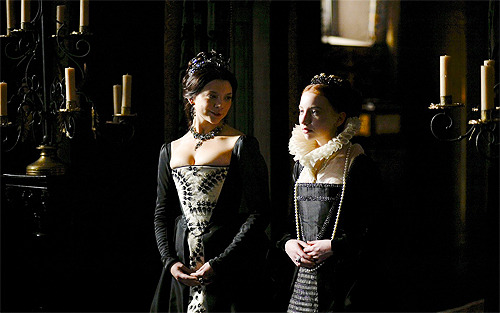
The Tudors (2008)
                Also along the lines of ‘man-stealing’ is the greatest reason in which Anne Boleyn was so maligned in her day, and is so maligned, in ours – she ‘stole’ Henry from Queen Catherine. This is the mother of all stereotypes against her; where there is strong doubt that the almost laughable adultery charges against Anne were true, she was undeniably the other woman in the divorce case of the century, and few will read between the lines and see that her situation was not so black and white. True, Henry was intent on marrying her upon being freed from Catherine, but he had been looking into annulment since years before he proposed to her in 1527, and had abstained from Catherine’s bed since 1524. In his heart, the king’s marriage to his first queen had ended long ago, while he began his pursuit of Anne, and if he had not met and fell in love with her, given the crucial changes in the political sands of the late 1520s, he would indefinitely have married a French princess. To be more specific, a friend of Anne Boleyn’s, Princess Renee.
                Anne’s conscience was visibly troubled by his ‘marriage’ to Catherine, and she was initially very unwilling. But it is more than likely that the, then, handsome king’s ardent pursuit of her eventually won her over, a chance at the crown satisfied her ambition for a ‘good match’, and a look at theology persuaded her to agree with the king, that his marriage was null and he was a free man. There can be no doubt that Anne eventually fell in love with the king, as they were two very similar characters, and there can be no doubt that Henry pursued her out of something greater than lust – he had never written love letters to any woman before, with his own hand.
                From there, the start of Anne and Henry’s public and passionate relationship, dozens and dozens of vile rumors began to proliferate. A less famous but highly shocking rumor states that Anne was actually Henry VIII’s daughter. There had once been some gossip that, as a young man, the king had dallied with her mother Elizabeth Howard; he would later deny this, but not before every Englishman in the land played on it. Then there is the rumor of witchcraft, which walks hand in hand with rumors of Anne’s horrific deformities.
In the six years before they were married, Anne was commonly called a witch by the commons, who came up with all sorts of stories of how she used sorcery to enchant the king and later, she would be charged at her trial with casting spells on Henry to not only seduce him, but make him impotent. Their evidence for her games with the devil were the alleged moles and warts that covered her body, namely a ‘wen’ on her neck which she tried to use the famous ‘B’ necklace to cover, as well as the notorious sixth finger and the gross, less famous rumor of a third breast. However, it is highly unlikely that Henry would choose a woman with such visible and horrific deformities to be the mother of the much-coveted and long-awaited male heir, whose perfection and impeccable genetics and health he would later prove to be obsessed with. Logic aside, historical record should tell all – these rumors of deformities came into existence only years – many years – after her death, quite deep into her daughter’s reign, actually, and were spread by someone who had never laid eyes on her. He was Spanish and a Catholic – obviously not a friend to Anne.
                Particularly in the summer of Anne’s first year as queen of England, when both Henry VIII’s illegitimate son and Lady Mary became deeply ill, rumors that the new queen was a poisoner heightened, and reached their zenith when Catherine fell deathly ill in December 1535 and died in January 1536. Yet at both these periods of time she was pregnant with a presumed male heir and savior who would protect her from any threat that Catherine, Mary or Fitzroy could have on her. As for Wolsey, whose 1530 death on the road to London is something often attributed to her, Anne would have happily watched an enemy’s trial and disgrace; considering he faced possible execution for his treason charges, poisoning him would have almost been merciful. Lastly, these poison charges should give rise to a question of morality – Anne was already a religious woman, and fear of the afterlife was a preeminent and driving force in Tudor society. She had a temper, a hot head and a vile tongue but it is highly unlikely that her conscience and strong Christian beliefs would allow her to commit murder.

There is a whole maternal side of Anne Boleyn that evades modern attention: she was an ‘evil stepmother’ – the end.  But for starters, was she? The queen was key to sealing the noble marriage of her illegitimate stepson, Henry Fitzroy, and sought friendship with Lady Mary, offering Catherine of Aragon’s strong-willed daughter restoration to her estranged father’s good graces if only Mary would acknowledge her as queen. Mary rudely addressed Anne as her father’s mistress, and from there, it seems their relationship only spiraled downhill. But it was under Jane Seymour that the Lady Mary was forced to sign the Oath of Succession, it was under Jane Seymour that execution even began to hang faintly in the air as a potential consequence to her obstinacy, yet the excessive cruelty her father treated her with is too often blamed on Anne. Whatever cruelty the queen showed her stepdaughter was likely out of desire to her protect her own daughter’s interests, and surely in her last heartfelt apology for their feuding while held a prisoner in the Tower, she did atone. Indeed, to her own daughter, Anne was among the most loving royal mothers in history; she was one of few who was happy to breastfeed Elizabeth on her own, and was scorned for being overly attentive to the child. In the future Elizabeth would remember and respect her mother.
                As for matters of piety, Anne Boleyn is seldom associated with saintliness. If at all one would concede to her having a hand in the reformation, they would say that it was for her own personal gain, that she convinced Henry to turn his face from Rome so that he could marry her. However, growing up in France, Anne had been friends with Princess Renee, and perhaps associated with Marguerite of Navarre, two women of highly radical and Protestant ideas who indefinitely influenced her religious views. Anne would develop a collection of French pamphlets and books of reformist ideals before even catching the king’s eye. Had it all been a game for her gain, there would have been no need to intercede with the king and save dozens of Protestants from being martyred, nor fund the educations of reformist scholars and encourage the spread of the English Bible so passionately. The English Bible symbolized the freedom of the people from papal tyranny; if they could understand what they were reading, their opinions would be more than the molding of clergy. However, one should not make the mistake of identifying Anne as a Protestant; she was a reformer open to Protestant ideas, but recorded theological debates with her brother should prove that she still believed in the bane of Protestantism – the host, and that deeds were key to salvation.
                On the subject of her brother, who Anne allegedly committed incestuous adultery with, one thing is certain: that the siblings were very close. They bonded based on common interests: the Reformation, the arts and fine living, and an obsession with France; they were witty, charming, social and intelligent. What they did in private, we can never know, but it seems that the bane of the ‘evidence’ against them in the 21st century is that he despised his wife and loved Anne, and to lay that to rest, truthfully historical record shows he and Jane Parker as enjoying a relatively happy marriage. The likelier is that Anne’s name could not be laid to rest if her brother lived and Cromwell viewed him as a rival for the king’s favor. This was the same with all of Anne’s accused lovers.
                George Boleyn, Francis Weston and Henry Norris had been the highest men in the king’s privy and the king’s best friends for decades. No matter how much political favor Cromwell had, the personal favor Henry bore these men would always stand in his way and their friendships with Anne made it easy to hit two (or six, to be exact) birds with one stone. Henry Norris was a close friend to the queen, and obviously a loyal one as he would defend Anne’s name to the death; Francis Weston was an attractive flirt, constantly in Anne’s rooms; George and her were close and again, Cromwell viewed him as a rival; but who were William Brereton and Mark Smeaton to the queen?
                The fact that Brereton and Anne had nearly no relationship stands as valid proof that the adultery charges which haunt the queen, even today, were but a fabricated plot by Henry and Cromwell. Brereton enjoyed patronage from the Boleyns but his true crime was his power in the North, and his vetoing of nearly all of the changes Cromwell wished to make there. He also enjoyed political power, being so close to the king’s bastard son, Duke of Richmond and Somerset, Henry Fitzroy. As for Smeaton, he was clearly in awe of the beautiful queen, and not being gentry, an easy target for confessions to damn Queen Anne. Indeed, Anne was found guilty at her trial, but at the given dates and times of her adulterous escapades she was known to be elsewhere, at different palaces even, and the treason trial allows the accused no defense. Graphic and erotic record of her extramarital affairs was highly prejudiced, chronicled by foreign ambassadors whose countries had been negatively affected by the changes in political sands catalyzed by Anne and sought petty vengeance. No one was present at Anne Boleyn’s side 24/7; no one but her can ever know what went on behind closed doors – however, the evidence for what did has been disproved by nearly every historian. My two scents is that it was tainted and her charges, hideously untrue. Her death and execution weren’t karma working or divine justice; it was the juridical murder of an innocent woman.
                If Anne was neither a man-stealer nor adulteress, then why on earth should she be called a whore? In her day, men disliked Anne for being an ‘upstart’; it was women who hated her with a fire and it is mostly women, today, who ‘slut-shame’ her – the irony is that slut-shaming is a highly sexist act, and Anne embodied many central feminist ideas. Her only sin, she said in a powerful and moving speech at her trial, was that she did not show her husband the humility which was required of the women of her day. She played at politics with some of the highest men in not just the land, but the continent; she brought down and essentially replaced the king’s most trusted adviser, she refused to lie like a doormat while her husband cuckolded her – she was brave and she demanded respect in spite of her sex, yet here she is, 500 years later, slut-shamed and scorned by people whose only image of her is a tapestry of interwoven, prejudiced stereotypes and misconceptions. Her death was unjust, but the spite of the ignorant in the 21st century is heinous.

Tuesday, May 7, 2013

Anne Boleyn: a Life

A COUNTDOWN TO HER EXECUTION: PART 1/4 ARTICLES

“To us she appears inconsistent—religious yet aggressive, calculating yet emotional, with the light touch of the courtier yet the strong grip of the politician—but is this what she was, or merely what we strain to see through the opacity of the evidence? As for her inner life, short of a miraculous cache of new material, we shall never really know. Yet what does come to us across the centuries is the impression of a person who is strangely appealing to the early 21st century: A woman in her own right—taken on her own terms in a man's world; a woman who mobilized her education, her style and her presence to outweigh the disadvantages of her sex; of only moderate good looks, but taking a court and a king by storm. Perhaps, in the end, it is Thomas Cromwell's assessment that comes nearest: intelligence, spirit and courage.” –Eric Ives

“Let them grumble – that’s how it’s going to be.” – Anne Boleyn, December 1531

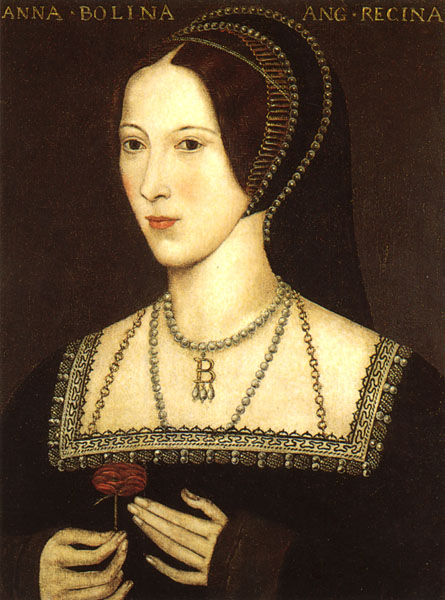
Hever Castle painting, c.1534
As Anne’s most respected biographer, Ives, so eloquently stated, Anne Boleyn’s life and character were indeed fraught with contradictions. Her recorded charity work, patronage and merciful religious interventions paint her as a kind and gracious lady; her ruthless hand in the destruction of Wolsey, beneficial for England or not, and her less-than-kind treatment of her stepdaughter Lady Mary, a cruel one. Her life as a politician and the most dominant female figure of her day, until Elizabeth, touched many and earned her a secure place in international historical record across the continent – how we, in our independent research, choose to view her from her actions and words is entirely our choice and opinion. In this series of articles, all of the stereotypes and misconceptions of her character, now and 500 years ago, as well as her legacy and her life in the dark, history-altering year 1536, will be discussed, but before that, the plain facts of her life must be laid out.

Today, most historians agree that Anne was born in 1501, key evidence being the age-minimum of twelve for an education in the Netherlands under Margaret of Austria in 1513. However, given the only primary sources, written by two figures very close to her life, that exist and list actual years, favor 1507, and the unlikelihood of her, known for attracting male desire, being a single 26-year-old (in 1526) when her two siblings were married at around 19, I believe she was born in 1507. Considering her father and Margaret of Austria were friendly, Anne’s young age as a girl of seven and not twelve probably mattered little. As for Anne’s remark in 1531 that her youth was passing her by, were that she was thirty and not twenty-four, by Tudor standards it would have passed long ago.

Her father was Thomas Boleyn, of some Irish and Norman descent, and her mother was Elizabeth Howard, sister of the most prominent figure in England, the Earl Marshal and Duke of Norfolk. Her older sister was Mary Boleyn, who, aside from being a royal mistress to King Henry VIII and King Francis I of France, was a very minor figure, and George Boleyn was her brother and best friend, a diplomat who shared her French inclination, taste for art and religious views. He enjoyed a close relationship with her future husband, King Henry.

Anne spent a year from 1513-1514 in the Netherlands, and became close to the Archduchess, who would write very positive comments like “so presentable and so pleasant, considering her youthful age, that I am more beholden to you for sending her to me, than you to me” in a letter to her father. She studied intensely and became fluent in French and Latin, and also began to learn music, dance and other female virtues. Archduchess Margaret was an independent, well-learned woman and a woman-regent in her own right and patroness of extravagant art, and Anne would grow up to embody her in many ways. In 1514 Anne became a maid-of-honor to Henry VIII’s sister, Mary Tudor, when she married Louis XII of France. Though Louis died within months and Princess Mary remarried, for love, and returned to England, Anne would spend almost ten years at the French court. Its dark, glamorous fashions and cultural graces would never leave her – nor would the values imparted in her between 1514 and 1522. Many of Anne’s books were reformist pieces in the French language, and her religious ideals would mirror the radical reformist king’s sister’s, Marguerite de Navarre. Later correspondence between these two shows respect and friendship.

Victorian engraving of Boleyn.
Anne Boleyn returned to England in January 1522, and contrary to popular belief, she did not attract Henry’s attention until around 1526. She did, however, attract attention, being, if not pretty, then highly alluring, graceful, stylish and of unique dark coloration. Her return was probably for a betrothal her father and Cardinal Wolsey were developing to settle the inheritance of the Irish Ormond earldom, which her father believed he had a claim to. But it came to nothing, probably dissatisfactory to Thomas Boleyn, who believed it should simply have been his. Anne’s older sister, Mary Boleyn, who had lied with her in France and briefly been King Francois’ mistress, was probably Henry VIII’s mistress around this time, and Anne began to pursue a doomed love affair with the heir of a powerful earldom – Henry Percy of Northumberland. Although they would fervently deny being betrothed, later on, it is likely that they were or at least discussed marriage at some point in their relationship. Whether or not this affair was consummated, we can never know, but he was her first love, and when they were tragically split by Percy’s father and the all-powerful Cardinal Wolsey so he could marry a wealthier woman, Anne’s heart probably hardened and this was where a future desire for vengeance against the cardinal began. Soon after this, Anne was exiled back to her family home of Hever Castle in Kent, and upon her return to court probably around 1525, she and Thomas Wyatt, a family friend to the Boleyns, began to court. Wyatt would compose a whole plethora of poetry describing his desire for the elusive Anne, who would be the great love of his life, and, a talented linguist and poet, herself, Anne enjoyed and excelled at making her own witty compositions.

However, Wyatt was married, and by 1526, probably not too long after the end of his relationship with her sister, Henry VIII, who would not only be the great love but the destroyer of her life, began his ardent and border-line obsessive pursuit of her. Anne and her dark French style and sumptuous wit stood out amongst the pale and shy English flowers; she was not only a particularly graceful dancer but the most talented female musician at the court: Lancelot de Carles said, “She knew perfectly how to sing and dance…to play the lute and other instruments.” Henry initially believed this would be just another flirtation or that he would perhaps have her as a mistress, but Anne resisted him at every turn. She was ambitious and eventually wanted to contract an advantageous marriage, which she knew would be impossible if her reputation was ruined for pre-marital sex escapades with a king, as her sister’s reputation had been. Her elusiveness only spurred Henry on, and when she withdrew from his advances to her family home at Hever Castle, he was desolate and wrote her many letters (eighteen in total, over the course of their affair survive). Henry had never written love letters to any woman before, and he seldom wrote even the most important of state papers in his own hand, letting Wolsey or a secretary write them. He was clearly taken with Anne.

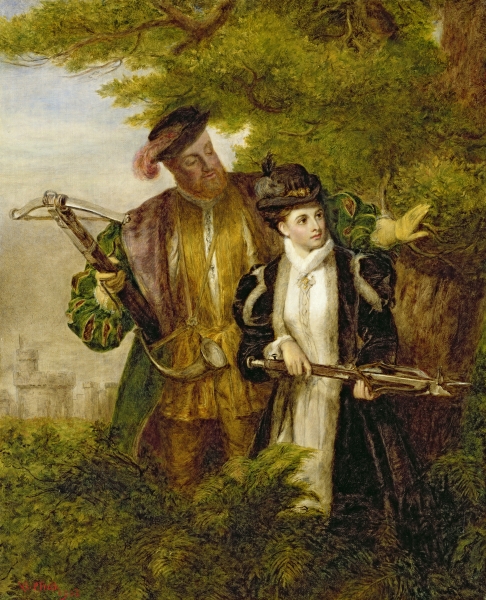
Painting of Anne Boleyn & Henry hunting at Hever.
Although he was already strongly of mind to divorce his wife, Catherine of Aragon, as she was undergoing menopause and they were without male heirs, his growing passion for Anne made for encouragement in his ‘matter’. When she refused even to be his maĆ®tresse en titre, one and only mistress, a title he had never offered before, it was around 1527 and Henry decided he could not live without her – he proposed marriage to her. Henry probably explained that he was intensively working on proving the illegality of his current marriage, and Anne accepted his offer with a very witty letter and a small trinket of a woman on a ship finally giving in to the ardent tide. Henry was that ardent tide, and unable to resist his charm and the inescapable heat of royal desire, she relented and became determined to be queen of England. We know that they became betrothed in 1527 as she began accepting his lavish gifts, where she had returned them for her virtue as a single maid, before. It was around this time that Henry made his disfavor with Catherine very clear, abandoning her Spanish and Imperial faction entirely to begin an alliance with the French.

From 1527 on Anne became very involved in the ‘Great Matter’ -- Henry's divorce -- which would be the papal court case of the century. Henry truly kept her in the know with regular updates, treating her as an equal, and tasked Cardinal Wolsey with getting him his annulment. In June of 1527, Henry would confront Queen Catherine, and when she accused him of Anne, he would not deny it. But unfortunately, the shifting political sands would not make getting a divorce easy – the Pope, the only religious authority in the continent who could grant Henry his annulment – was a prisoner of Catherine of Aragon’s nephew, Emperor Charles, and at his mercy, the Holy Father wouldn’t dare disgrace his captor’s family. While most of England was in a roar, especially when they discovered that Henry intended to marry an English commoner, Henry’s case, which he constantly discussed with both Anne Boleyn and canon lawyers, was plausible to him. Catherine being his late older brother’s widow, their marriage was thus incestuous and cursed by God to be fruitless and without male heirs.

In the meanwhile, Cardinal Wolsey was thwarted at every turn in his attempts to appease his increasingly frustrated master with an annulment. It should not have been so difficult; Eleanor of Aquitaine and her first husband easily acquired one for only the slightest degree of affinity. Wolsey tried to set up his own papal court based in France, he tried sending canon lawyers to beg the Pope for a divorce, and bombarding him with letters protesting Henry’s cause. Wolsey favored a French alliance deeply and was surprised and upset upon learning that the king intended to marry not a French princess, but Anne Boleyn. At last in 1528, the same year Anne nearly died of sweating sickness, a papal legate consisting of Wolsey and Campeggio was sent to England, to arrive in 1529, but after hearing testimonies from both Henry and Catherine, it was revealed that the Pope was but stalling for time and no decision was made. Anne and Henry were both outraged.

Tensions between Anne and Cardinal Wolsey had been high since the beginning, given their dark history regarding the Percies, and Anne, who had never forgiven him, now had the means to expose and destroy him for his continual failures. She and her family, the Boleyns and the Howards, turned against him, along with Henry’s best friend, the Duke of Suffolk, and Anne spearheaded his destruction, repeatedly reminding Henry of Wolsey's fatal mistakes in such an important matter, and going as far as implying that he was sabotaging him. Wolsey was thus stripped of several church offices and eventually left with but his place as Archbishop of York. As his power came to lessen and lessen, Anne’s mounted exponentially, and as she began to doubt that the Pope would ever give them what they wanted, she began to share some of her reformist pamphlets with Henry, which included Tyndale’s The Obedience of a Christian Man. These pamphlets denounced papal authority in kingdoms, claiming the head of a country’s church was its king, not the Pope. Anne had felt strongly about the reformation of the church since she was a child in France, and so we cannot fully credit her desire for a split with the corrupt Vatican to her ambitions for the throne.

By 1530, Anne’s father was made Lord Privy Seal and Earl of Wiltshire, and when Wolsey was found to be plotting Anne's exile and demise with the Pope and Queen Catherine, she had a strong hand in his arrest for treason. Wolsey was saved from potential execution by death on the road. In isolating the king from the cardinal, who had effectually ruled through Henry since his ascent in 1509, Anne became his primary adviser despite her gender, and set him free from the greedy and unpopular clergyman, to be his own king. Henry was declared Head of the Church of England but was faced with not only criticism from Englishmen, but the clergy, who included Fisher and More, too. His unpopularity began to rise, especially when he separated from Catherine of Aragon entirely in summer 1531, but the English victimized Anne, the 'Concubine' -- not the king. In 1532, to secure an alliance with France, Anne accompanied him on the greatest state trip since the Field of Cloth of Gold in 1520 (which Anne had attended as a girl) of his reign, as his consort, to Calais. She was created Marquess of Pembroke in her own right, and thus the wealthiest and most influential woman in England. Henry proved to not only love Anne, but to respect and revere her, too, in entrusting a whole marquessate to her. However, the royal women of France did not respect her and though King Francois was happy to have a private audience with her, not even Marguerite de Navarre would see her. Anne scandalized the whole continent with her uncharacteristically brazen and proud behavior as a Christian woman, and also her relationship with Henry, who was technically not her husband.
               
Natalie Dormer as Anne Boleyn and Jonathan Rhys Meyer as Henry VIII
Their relationship was consummated around this time after six years, probably because, with Henry as Head of the Church of England, Anne’s most loyal supporter as the Archbishop of Canterbury, and the French their steadfast ally, her future appeared secure regardless of the Pope’s desires. She found herself pregnant in January, although the child was conceived around a month earlier in December. They were secretly married twice – once in Calais and then a second time in January of 1533 to make matters as secure as possible. Henry would take no chances when it came to a potential male heir for England.

The months to follow would be focused intensely on both the formal split with the Roman Catholic Church and Henry’s annulment. Thomas Cromwell, a skilled lawyer and thanks to Boleyn patronage, Henry's favorite new henchman, worked closely with the Archbishop of Canterbury to pass English laws that stated English matters were to be settled in England and foreign powers had no right to interfere and their rulings were null on English ground.

Their marriage was faced with severe disapproval once it was made public, and in July 1533, Henry was excommunicated by the Pope although by law, this should have had no effect on Henry. Princess Elizabeth was born in September, and while there was disappointment pertaining to her sex, that Anne proved capable of bringing a baby to term gave England some hope. Overcome by affection for her daughter and even breastfeeding Elizabeth much to Henry’s and the people’s outrage, Anne worked to secure her daughter’s place as Princess of Wales, and to appease his wife the king declared his daughter by Catherine, Mary Tudor, illegitimate, and went as far as forcing her to serve her baby-stepsister. The legend that Anne was a wicked stepmother has little basis – she was polite to Mary, but when her stepdaughter refused to acknowledge her as Queen, a title she had worked relentlessly for, Anne was displeased and encouraged her relatives to whom Mary deferred to treat her with more strictness, something she would repent deeply within a few years.

In 1534 Anne conceived a second time, but by the summer when her brother George returned from an embassy to France, she had either miscarried or had a stillbirth; this was, by Henry’s orders, kept secret for as long as possible. 1534 was an important year of Anne’s reign; the Act of Succession was created sometime while she was pregnant. The Act of Succession of 1534 declared that the heirs of Anne Boleyn – not simply ‘wife of King Henry’ – would rule as the next kings or even queens of England, thus giving her power as queen by statutory right. Thomas More, who had always been an admirably steadfast supporter of Catherine, would repeatedly refuse to swear an oath on the act, and by summer of the next year he would be executed for treason. By the end of that year, the French, who had once seemed to favor Anne so staunchly, publicly insulted her by trying to arrange a marriage between the dauphin and Lady Mary, disregarding her daughter Elizabeth entirely. It was around this time that her older sister eloped with a common man and took with child at once; in response, Anne coldly turned her face from and banished her. It is possible that this was out of envy – her own marriage was at this time rather cold, and while her sister was pregnant, she had just lost a child, secretly in summer 1534. These must have been harsh times for Anne, so used to 'winning' by now; her favorite lapdog Purkoy took a fall from a window, which biographer Joanna Denny suggests might have been the doing of her enemy the Spanish Ambassador Chapuys, and Henry VIII began to court her young cousin, Mary Shelton.

The Book of Hours of Anne Boleyn.
Queen Anne's royal court became a center of art and education as Margaret of Austria’s had been. She was a patroness to many artists, encouraging the spread of the Renaissance, and also to poor scholars, funding the educations abroad for men who would eventually write great Protestant literature and dedicate their books to their queen. In Queen Anne’s own court, a book of poems called the Devonshire Manuscript was written. Though her reign was short, she had very much influence over Henry and his decisions, so that most of the men he appointed as bishops or councilors were of her choosing, and her favor was regarded as the key to the king’s ear. Her influence was further exhibited in the marriage of her cousin to her stepson, Henry’s bastard Fitzroy.

However, by the fateful summer of 1535, Anne was at the height of her influence over Henry, and it seemed he was more in love with her than ever. The court went on progress to the Severn, home to many families of reformers, to get support for the changes of the Church of England. Queen Anne was paid every respect, especially at Acton Court where the French-styled art of many of the artists under her patronage, and her own French fashions, were encouraged in full. The tour was also a personal trip to Anne, as its goal was to spread the Reformation and so, essentially, her own religious views. The queen was a key player in the Reformation; aside from sponsoring the writings of many reformers, owning many books (some secretly) describing radical reformist ideas, and fervently encouraging the spread of the English Bible (there was a copy available to everyone in her rooms), she implored mercy for Protestant ‘heretics’ who include a merchant Richard Herman, a man persecuted for owning an English Bible. By the time they returned to London in the fall, Anne was pregnant again.

In January 1536, Catherine of Aragon died after being sick for months, and though many believed that this was Anne’s doing via poison, she recklessly celebrated the death of her foe and former mistress. Anne had definitely respected Catherine as a worthy opponent -- otherwise she would not have been so relieved by Catherine's death. Although Anne viewed it as a good thing, it made her, in a sense, more vulnerable than ever until she had a son – with Catherine dead, if Henry returned to the Roman Catholic Church, he would be a widower free to remarry. However, she was pregnant and at last it seemed like she had it all.

But tragedy struck in the form of a miscarriage at the end of the month. She blamed the miscarriage not only on the nearly fatal fall Henry had taken in a jousting tournament, but also his dalliance with her lady-in-waiting, Jane Seymour. Although the miscarriage was severe to the point that she was not even able to walk, Henry offered her no comfort and instead coldly replied that he now saw God did not see fit to give him heirs male through her, and left her, Jane Seymour on horseback beside him, to Greenwich. Thomas Cromwell, once a loyal supporter to her, gave up his own rooms for the king's new mistress. Biographer Retha M. Warnicke attributes Anne Boleyn’s tragic and impending fall from grace and execution on this miscarriage, but it seems more likely to me that it was more political. Not only were the diplomatic sands once again shifting with the king considering an alliance with the Spansh, but as were the political sands with Cromwell taking charge of money from destroyed monasteries and ruling that it should be placed in the state treasury. Anne wanted a percentage of these moneys to be dedicated to education and charity, causes that were clearly very close to her based on prior generous actions, and sparred ferociously with Cromwell demanding her will be seen to over his.

Cromwell’s influence over Henry was perhaps second only to Anne’s, and if he believed this, then his fatal split with the queen could mean losing everything, as it had for Wolsey when he fell out with her so many years ago. If Anne was able to eventually have a son then her renewed favor with the king would endow her with the power to destroy him. Thus, in around April 1536, Cromwell allied with all of Anne’s enemies – the Seymours (the family of the king’s mistress), Ambassador Chapuys and other powerful political factions who were quick to jump from a sinking ship. This involved forcing confessions from one of her musicians of her involvement in adultery, incest, treason and even witchcraft. By May 2nd she was arrested, and her five lovers and partners in treason were revealed to be the musician, Mark Smeaton, as well as hers and the king’s best friends, Sir Henry Norris, loyal to her to the end, Francis Weston, William Brereton, and her own loyal brother, George Boleyn. At her trial on May 15th, Anne was gracious and dignified as she accepted the sentence of death from her own uncle, and made an eloquent speech which roused favor for and sympathy from the English commons; the general opinion was that Henry was a philanderer and a wife-murderer. One of the men who should have been her judge, Henry Percy, her former lover, refused to attend the tral, claiming to be ill.
Artistic depiction of trial of Anne Boleyn on 15 May, 1536
On 17 May, Anne’s lovers were executed not far from her chambers, and George Boleyn’s highly Protestant final words probably touched the queen, a reminder of all the times they had spent sharing in theological discussion and debate together. Her marriage to Henry was also annulled by a reluctant Archbishop Cranmer on that day, who revered her deeply and in a letter to the king said he never had more respect for a woman than he did, her. Clearly he admired her, but he feared the king more and must have believed, to some mild extent, that she was guilty as charged. Although the Act of Succession had not yet been revoked and thus she was still queen by statutory right, her daughter Elizabeth was declared a bastard. Two days later on the morning of 19 May, Anne Boleyn was executed by a French swordsman who must have been called from France days before her trial, days before she was even sentenced to death, further highlighting the injustice of her death, in order to arrive on time. The execution was closed to spectators who weren’t Englishmen for fear that her tongue would be sharp as it had always been in her life and she would say rash things to incriminate the king; however, in order to protect her family and loved ones still living, including her daughter Elizabeth, her speech was typical of all execution speeches – she praised the king and asked onlookers to pray for her. It mattered little what she said as she had made the speech of her life at her trial, anyway. Chroniclers who witnessed the event said that the queen had never in her life appeared more serene or beautiful.

Elizabeth would grow up to embody her late mother in many ways – she would be a linguist, a musician and the strongest Protestant ruler ever. She would also be as strong, intelligent, ferocious and void of feminine weakness as Anne Boleyn had been. In the days before her arrest, Queen Anne, sensing danger, had chosen her friend and chaplain, Protestant Matthew Parker, to be responsible for her daughter’s religious upbringing, and he obviously raised her in the faith of her lady mother. Elizabeth would clearly appreciate her mother's choice, and in 1558, upon becoming Queen of England, she would appoint him as her Archbishop of Canterbury, the most powerful religious authority in the land.

Natalie Dormer as Anne Boleyn alongside her young daughter Elizabeth in a vision of Henry VIII's on The Tudors.

A/N: I have written a lot more about Anne Boleyn and the important year of 1536 and I highly recommend two articles I wrote which include details that had to be omitted, for length, in this post. Thank you for reading!